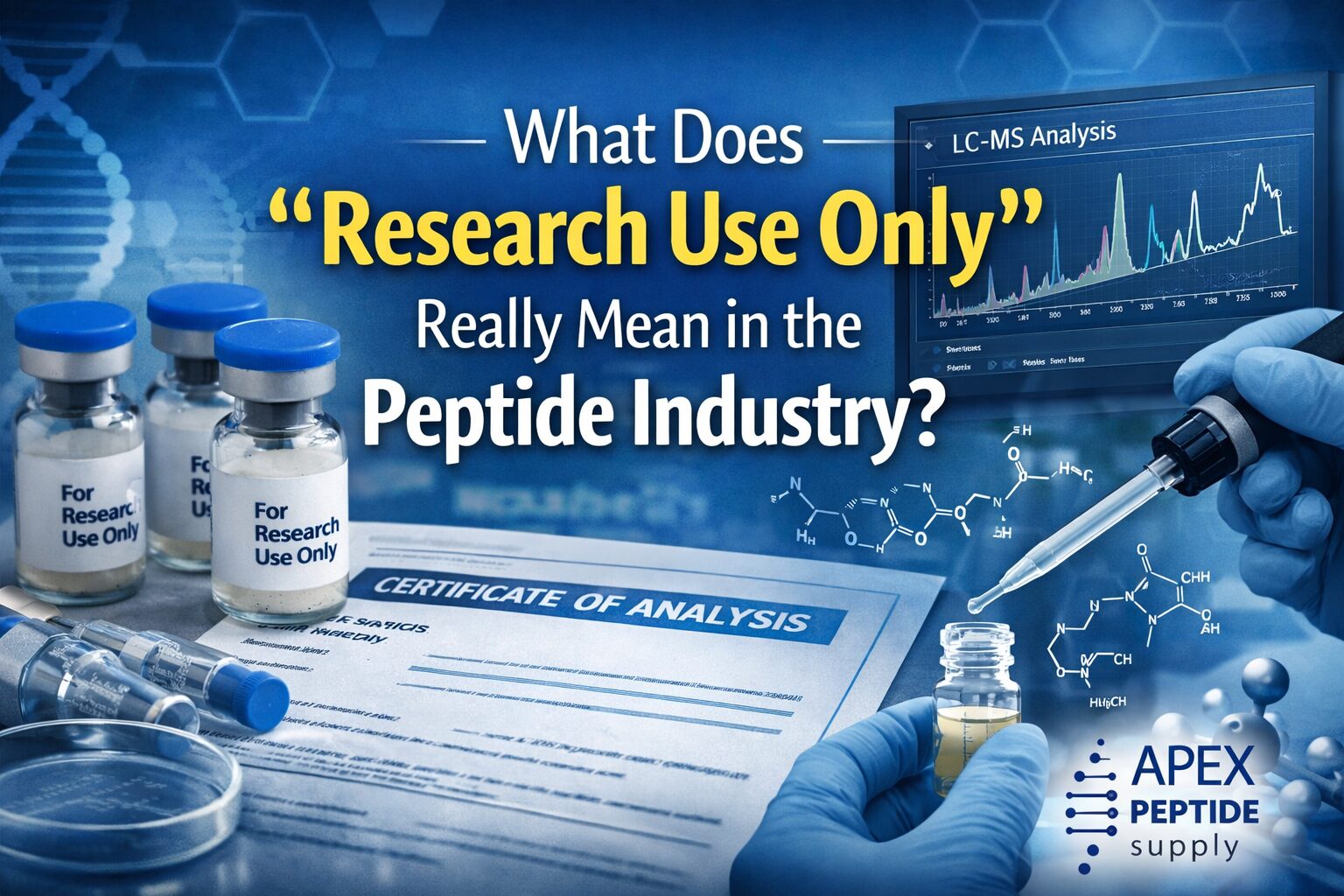
Peptide testing is the set of logical checks used to assess a peptide sample before it is utilized in a research operations. In functional COA review, the term typically refers to pureness screening, identification testing, and paperwork testimonial. Purity screening asks how much of the found sample is the main peptide versus associated impurities. Identity testing asks whether the determined mass or sequence-related evidence matches the designated peptide. Documentation review asks whether the record is batch-specific, traceable, and described enough to be examined. Peptide testing is the analytical procedure used to verify that a research study peptide is both pure and appropriately identified.
HPLC actions splitting up and loved one peak location; mass spectrometry measures mass-to-charge habits that can be utilized to validate molecular identity.
Accreditation by pertinent bodies (such as ISO/IEC or qualification for GLP/GMP conformity) is a strong indicator of high quality.
Peptide sequencing is vital for identifying the exact amino acid sequence of peptides, consisting of adjustments like phosphorylation or acetylation.
We incorporate LC-MS/MS and chemical food digestion analysis to precisely confirm the sequence and alteration sites of non-natural modified peptides.
HPLC informs you what proportion of Helpful hints your example is the main substance-- however it does not validate what that main compound in fact is. A top with the ideal retention time can theoretically be a relevant peptide with comparable hydrophobicity. Mass spectrometry supplies identification confirmation by measuring molecular mass straight. We assess peptide length, sequence composition, expected molecular weight, alteration type, salt kind, sample background, and desired downstream usage prior to specifying the analytical route.
Comprehending Peptide Purity Screening
A single common chromatographic method is frequently insufficient for peptides that are hydrophobic, very standard, carefully associated in turn, or partly detoxified. We give HPLC and UPLC purity evaluation workflows that focus on beneficial splitting up instead of just producing a portion. We develop logical operations around the sample kind, series functions, adjustment profile, and decision context. Projects may include unrefined intermediates, detoxified peptides, kept whole lots, client-supplied products, or Laboratory Standards materials produced with our custom-made peptide synthesis platform.
What Other Examinations Might Include
Irregular particle size circulation and morphology can affect bioavailability and security. BOC Sciences is equipped with tools like DLS, TEM, SEM, etc, to totally evaluate nanoparticle size, distribution, and microstructure. For us, pureness isn't just a portion-- it's an assurance of integrity, consistency, and regard for the science being done.
Solutions
Other strategies like electrophoresis, capillary electrophoresis (CE), and nuclear magnetic vibration (NMR) can also be utilized to evaluate peptide structure, cost, and purity, making certain comprehensive characterization. In COA review, it usually includes HPLC pureness testing, mass spectrometry identification confirmation, and batch-specific documents revealing the checked great deal, technique, results, and day. For peptide pureness testing, reverse-phase HPLC is the common conceptual version. The chromatographic purity is then calculated by contrasting the area under the major optimal with the overall location under all incorporated optimals.