Peptide Quality Control & Purity Screening Boc Scientific Researches

Reviewing A Palmetto Peptides Coa: A Worked Instance
Some suppliers market items consisting of various compounds than marketed. Others thin down peptides dramatically while declaring full strength. A couple of sell entirely inert materials, maximizing the trouble of discovery without proper screening. The peptide in your vial may not even be the substance you got.Where can I send my peptides to test for pureness?
ACS Peptide Examining Labs is an expert peptide analysis lab that approves samples from all 50 states. Whether you require to test peptide pureness, validate a provider''s Certificate of Analysis, or run thorough contaminant screening, our lab provides fast, accurate results with thorough reporting.
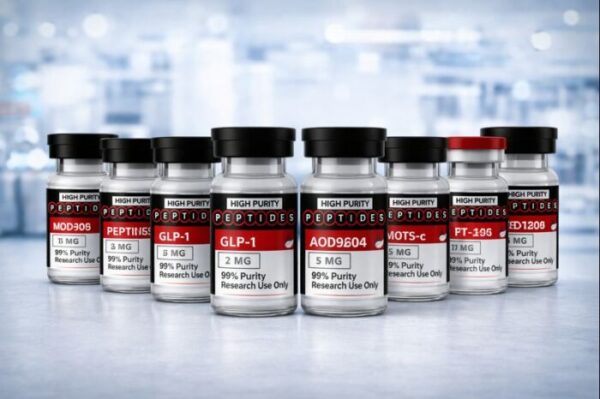
What's The Distinction In Between Supplier Coa And Third-party Testing?
In situation I don't see you, great afternoon, good night, and great evening. May your examinations stay accurate, your peptides stay pure, and your research remain validated. Provided the popularity of compounds talked about in sources like the semaglutide versus tirzepatide comparison, verification guarantees study with the intended compound. Cumulative alertness enhances quality requirements throughout the market by fulfilling top quality suppliers and subjecting bothersome ones. Basic testing commonly takes 5-7 business days from example invoice. Prior to devoting considerable money to large amount acquisitions, testing a sample offers assurance that the bulk order will certainly fulfill assumptions. Any considerable discrepancy suggests the sample isn't the declared peptide. If you assume 100% content when the actual web content is 75%, your determined dosages are 25% less than meant. This discusses why some scientists report weak results than anticipated in spite of adhering to published protocols. ESI-MS (Electrospray Ionization Mass Spectrometry) creates multiply-charged ions, which makes it possible for analysis of larger peptides and provides higher sensitivity. ESI is usually combined with liquid chromatography (LC-MS), integrating separation and recognition in a solitary analysis. The consequences of poor quality peptides prolong beyond wasted money.- With approaches such as HPLC and mass spectrometry, scientists can better comprehend peptide make-up, confirm product identity, and review distributor high quality criteria.
- HPLC steps chromatographic pureness by dividing the target peptide from relevant pollutants and calculating main-peak location percent.
- While greater purity percentages are commonly liked, purity ought to not be examined alone.
- Mass spectrometry examines molecular mass and can assist verify peptide identification.